SPEAKERS

Alain Berset became Secretary General of the Council of Europe in September 2024. Prior to that, Mr Berset was an elected Minister in the Swiss government (Federal Council) between 2012 and 2023. During that time, he headed the Federal Department of Home Affairs as Swiss Minister for Health, Social Affairs, Culture, Equality and Anti-Discrimination, and was Minister for Public Health throughout the Covid-19 pandemic. Mr Berset also served twice as President of the Swiss Confederation (2018 and 2023), during which he represented Switzerland on the United Nations Security Council and at the Council of Europe’s 4th Summit of Heads of State and Government, where he signed the Reykjavik Declaration on behalf of his country.
Before joining the Federal Council, Mr Berset was a member of the Council of States, the upper house of the Swiss Parliament. He was elected as its youngest member in 2003 and went on to serve as its President from 2008 to 2009. He was also Vice-Chair of the Socialist Group in the Federal Parliament, 2005-2011.
Prior to elected politics, Mr Berset held academic roles in economics at the University of Neuchâtel and the Hamburg Institute of International Economics and worked as an independent communications and strategy consultant for associations, companies and non-governmental organisations.
Alain Berset was born on 9 April 1972 in Fribourg (Switzerland). He has an MSc in political science and a PhD in economics, both from the University of Neuchâtel. He is married with three children.
Frédéric Albert has been teaching history, geography and political science at the Franco-German High School in Freiburg im Breisgau. He leads Politeia, a student workshop dedicated to citizenship and European democratic issues, and organises educational visits to European institutions, including the Council of Europe and the European Central Bank.
He holds a PhD in Political Science from the University of Luxembourg and a Master’s degree in European Governance. His research focuses on populism, economic and social rights, deliberative democracy and social cohesion. He has a particular interest in participatory methodologies and their application in education.
Since 2023, he has been a member of the Pool of Experts of the Council of Europe’s Observatory on History Teaching in Europe (OHTE).
Fabrice d’Almeida is a French historian specialising in contemporary history and the media. A former student of the École normale supérieure, agrégé, Doctor of History and accredited to supervise research (HDR), he is a professor at the Université Paris-Panthéon-Assas, where he has served as Vice-President for publishing and media since 2021. He also chairs the university’s Department of Information and Communication Sciences.
His research focuses on political propaganda, the media and Nazism. He is the author of several books on these subjects.
He appears regularly on television and radio, currently as a columnist on Franceinfo, and takes part in television and radio programmes on history.
Antoon De Baets is emeritus professor of History, Ethics, and Human Rights at the University of Groningen, the Netherlands. He is the author of about 250 publications on the censorship of history, the ethics of historians, and the history of human rights, including Responsible History (2009), Crimes against History (2019), A Human Rights View of the Past (2025), and Censorship of History (2026). He is the founder of the Network of Concerned Historians and its coordinator (1995–2025), President of the International Commission for the History and Theory of Historiography (2022–2027), member of the Academia Europaea (2024–), and chair of the Scientific Advisory Commission of the official research project “The Netherlands and Afghanistan 2001–2021” (2023–). He was awarded the Freedom of research prize “lapis animosus” by the Swiss Historical Society (2025). He is the editor of the forthcoming Palgrave Handbook of Attacks on History (2027).
PhD Edgars Bērziņš is Head of the Administration for Education of Jūrmala Municipality (Latvia), Lecturer at the University of Latvia, and an Evaluation Expert for the European Commission’s programmes. His research focuses on history education, narrative competence, trustworthy artificial intelligence, and human-AI collaboration in educational assessment. He has published internationally on narrative learning, the history of education, and AI-assisted assessment, and has presented his work at EuroClio, ISCHE, and other international conferences. His current research explores how responsible AI can support the assessment of historical thinking and narrative competence while maintaining pedagogical validity and academic integrity.
Spécialisée dans les communs numériques, Adélaïde a d’abord été chargée de structurer la collaboration internationale francophone WikiFranca. Récemment elle se focalise sur le soutien aux bénévoles qui vérifient, sourcent et contribuent à Wikipédia, le Wiktionnaire, Wikimedia Commons et bien d’autres projets Wikimédia. Ses actions portent notamment sur la promotion des langues minoritaires, l’équité sur le web, l’IA pour renforcer l’intégrité de l’information, et les stratégies de renforcement des communs numériques.
A specialist in digital commons, Adélaïde was initially tasked with structuring the international Francophone collaboration WikiFranca. Recently, she has focused on support for the volunteers who verify, source and contribute to Wikipedia, Wiktionary, Wikimedia Commons and many other Wikimedia projects. These activities notably focus on the promotion of minority languages, online equity, the use of AI to strengthen the integrity of information, and digital commons reinforcement strategies.

Caitríona spent 15 years as a primary teacher in Dublin’s north inner city and is now an Assistant Professor in History Education at the Institute of Education at Dublin City University. Her research focuses on primary history education, children’s historical thinking and enquiry-based learning, with particular interests in multiperspectivity, marginalised histories and the role of history education in fostering critical and democratic engagement.
Her work bridges classroom practice, teacher education, curriculum development and public engagement. In 2024, she co-edited Pushing the Boundaries of Human Rights Education (Routledge) and Beyond Single Stories: Changing Narratives for a Changing World (Information Age Publishing).
In Ireland, Caitríona contributes to curriculum development through the National Council for Curriculum and Assessment’s Social and Environmental Education Curriculum Development Group and the Heritage Council of Ireland’s MAIGHNE advisory group. She also works with the National Museum of Ireland and other cultural institutions.
Internationally, she is a member of the Scientific Advisory Council of the Council of Europe’s Observatory on History Teaching in Europe and is Co-Chair of the History Educators International Research Network (HEIRNET). She also served as Irish Principal Investigator on the LETHE Erasmus+ project on hidden and marginalised histories.
Arthur Chapman is Professor of History Education and Head of Department of Curriculum, Pedagogy and Assessment at IOE, UCL Insitute of Education, University College London. He holds degrees in History (BA) and Social and Political Science (MPhil) from the University of Cambridge and a Doctor in Education degree, in History Education, from the University of London. Arthur is a fellow of the Royal Historical Society, an Honorary Fellow of the Historical Association and a School’s History Project Fellow and member of the SHP’s Council. He is Editor-in-Chief of the History Education Research Journal, and series editor of The International Review of History Education and the open access UCL Press book series Knowledge and The Curriculum. Arthur taught history and related subjects for 12 years before moving into university history teacher education and history education research in 2005. He has worked at the universities of Cumbria and Edge Hill.
Rui Damaceno is a PhD researcher in Educational Sciences, specialising in History Education, at the University of Minho, Portugal, and a doctoral fellow funded by the Portuguese Foundation for Science and Technology (FCT). His doctoral research explores how history students and teachers interpret and validate historical information, with particular attention to disinformation, historical thinking and historical literacy. He holds a BA in History and an MA in History Teaching from the University of Minho and has worked as a history teacher with students aged 10 to 17. From September 2026, he will also serve as an Invited Assistant Professor for the Master’s programme in History Teaching at the University of Minho. He is a member of CIEd – Research Centre on Education and EDHILAB – History Education Laboratory.
Ander Delgado has a Degree in History from the Autonomous University of Madrid and a Ph.D. in Contemporary History from the University of the Basque Country. He is a professor in the Department of Social Sciences Didactics, of the Faculty of Education of Bilbao at the University of the Basque Country. He is currently researching about political context, curricula and history textbooks in the Basque Country during the democratic period.
Hayley Edmonds is a bilingual English-French moderator, journalist and international event host based in Paris. With over 15 years of experience, she specialises in moderating high-level conferences, executive summits and international forums across technology, innovation, sustainability, media, mobility and sport.
She has worked with organisations including UNESCO, BNP Paribas, Dassault Systèmes, TotalEnergies, Renault, LVMH, Orange and Viva Technology, facilitating discussions with senior executives, policymakers, researchers and industry leaders.
Alongside her corporate work, Hayley is a television presenter and reporter in international motorsport, hosting live broadcasts and interviewing world-class athletes and decision-makers at major sporting events.
Richard Fodor is a Lecturer at Pázmány Péter Catholic University, where he teaches history didactics and contributes to teacher training. He also serves as a secretary of the Hungarian Historical Society Teacher Division. His doctoral dissertation examined multiperspectivity in history education and its role in developing students’ historical thinking. His main research interests include historical thinking and empathy, comparative research on history education, and international cooperation in the field. He has coordinated activities in several international projects, including Online Teaching in the Visegrad Region, Making Visegrad Histories Digital, and Mohács 500 Dialogue. His work combines empirical research, teacher education, curriculum development, and the creation of classroom materials. He is also interested in the history and memory of the collapse of state socialism and the democratic transformation of Central and Eastern Europe.
Édouard Geffray is France’s Minister of National Education. A graduate of the École nationale d’administration, Sciences Po Paris and Paris IV Panthéon-Sorbonne, he began his career at the Conseil d’État (Council of State) in 2005, subsequently serving as a public rapporteur and maître des requêtes. From 2012 to 2017, he held senior positions at the Commission nationale de l’informatique et des libertés (National Commission for Information Technology and Freedoms), including Secretary-General. In 2017, he became Director General of Human Resources at the Ministry of National Education and, from 2019 to 2024, served as Director General for School Education. From 2024 to 2025, he was an assessor in the Litigation Section of the Conseil d’État. He became Minister of National Education in October 2025.
In her diplomatic career, Ana Gomes served at Portuguese diplomatic missions to the UN in Geneva and New York, as well as in London and Tokyo. She was actively engaged in negotiations relating to the independence of Timor Leste (East Timor) and the reestablishment of diplomatic relations between Portugal and Indonesia. In 2003 she entered politics, serving three terms as a Member of the European Parliament between 2004 and 2019 for the S&D – Socialist and Democrats Group. She stood as an independent candidate in Portugal’s 2021 presidential election, finishing second. Ana Gomes continues to campaign for human rights, transparency, and against corruption and organised crime.
Matjaž Gruden is Director for Democracy at the Council of Europe, which includes Council of Europe activities and programmes in the area of education, including education for democratic citizenship, youth cooperation, civil society, media freedom, culture and cultural heritage.
Matjaž Gruden previously served as Director of Policy Planning, Deputy Director of the Private Office of the Secretary General, political adviser and speechwriter for the Secretary General and President of the Parliamentary Assembly of the Council of Europe. Prior to his career at the Council of Europe, he was a diplomat at the Slovenian Ministry of Foreign Affairs, posted in Brussels. He holds a law degree from the Law Faculty of the University of Ljubljana, as well as a post-graduate degree in EU law from the College of Europe in Bruges, Belgium.
Jack Hanning was elected President of the Association of Schools of Political Studies of the Council of Europe in 2024. A founding member, he had been its Secretary General since July 2008. He has devoted most of his working life to Europe, first in education, translation and journalism, and subsequently in multilateral organisations. At the Council of Europe, he headed the Communication Department before becoming the Organisation’s Director of External Relations. Educated at Malvern and Oxford, he is fluent in four languages, and has taught at the University of Strasbourg and Syracuse University.
Sébastien Hertsens obtained an MA in History (2022) and an MA in European Studies, with a major in Europe and Asia (2023), at KU Leuven. He specialises in the politics of memory, the realm of contested histories, Sino-European relations, media history, and the (geo)political history of Europe and China. In his first dissertation, Sébastien analysed the historical interactions between the Belgian monarchy and the media. In his second Master’s thesis, Sébastien examined how historical narratives and ideas on legitimacy interact with policymaking in the Sino-European context.
Sébastien joined KU Leuven in 2023 as a teaching assistant and Programme Coordinator for the English-taught Master of History. Sébastien was also actively involved in the KU Leuven Junior College project for the Humanities cluster, which aims to support final-year secondary school students with their study orientation for undergraduate studies.
Marnie Hughes-Warrington AO is Bradley Distinguished Professor of History and Philosophy at Adelaide University. Since 2020, she has published a series of works on AI-generated histories. Her most recent book is Artificial Historians (with Lewis Yurlapurka O’Brien and Anne Martin, 2025) and History and Artificial Intelligence is forthcoming with Cambridge University Press.
Michael Kane is a Senior Policy Manager in Public First’s Education Practice. At Public First, he works directly on the Commission for Countering Online Conspiracies in Schools and works across policy, advocacy, research and communications to support the project. Before joining Public First, Michael worked in policy and advocacy for a school attendance charity and worked for a political monitoring company, working with clients from across the education and skills sector. He holds a first-class honours degree in Politics from Newcastle University and a distinction in Political and Legal Theory MA from the University of Warwick.
Rūta Kazlauskaitė is a political scientist at the Faculty of Social Sciences, University of Helsinki, Finland. Her research examines how extended reality (XR) technologies are transforming political communication and the ways in which people experience the past. She focuses particularly on immersive historical storytelling, emotional manipulation, disinformation and propaganda, as well as the critical literacies needed to recognise and resist them. She currently leads the Kone Foundation-funded project Halbwachs in the Metaverse: Storyliving and Democracy in the Age of Immersive Spatial Computing (2025–2028). Her work has appeared in journals including Memory Studies, Rethinking History, Memory, Mind & Media, International Journal of Heritage Studies and Journal of the Philosophy of History.

Eda Kıvanç is an MA student in Teacher Education for Art and History at the University of Cologne and a research assistant at the university’s Research Training Group 2212 Dynamics of Conventionality (400 –1550). Her academic interests lie at the intersection of history education, historical methodology, public history, and late medieval history, with a particular focus on the analysis and communication of historical sources.
Alongside her studies, she has several years of experience in interdisciplinary academic research and has contributed to university teaching on late medieval print culture, primary-source analysis, and historical research methods. She has also presented art education research addressing research design, data collection, and qualitative analysis. Her work is particularly concerned with how historical knowledge is produced, interpreted, and communicated within educational contexts.
Alain Lamassoure is the Founding President of the Observatory on History Teaching in Europe and served as Chair of the Governing Board from 18 February 2021 to 27 February 2025. He previously served as a Minister Delegate for the Budget, Minister Delegate for European Affairs and as a Member of the European Parliament for France. After a career as a senior civil servant in several ministries and in the General Secretariat of the Presidency of the French Republic, he held numerous political mandates at the local, regional, national and European levels. He ended his political activities in 2019 to devote his time to teaching European Public Finance at Sciences Po Paris.
Amaia Lamikiz has a degree in Geography and History from the University of Deusto (Spain) and a PhD in Contemporary History from the European University Institute of Florence (Italy). She specialises in contemporary history with a special focus on social and cultural history. Her research has dealt with the connections between sociability, culture and the formation of identities. She has extensive teaching experience in secondary education and currently teaches didactics of history and social science at the University of the Basque Country, where she investigates the role of history education and the role of historical memory in the development of citizenship competences.
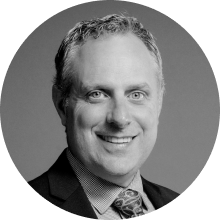
Stéphane Lévesque is Professor and Director of the Virtual History and Stories Lab at the University of Ottawa (Canada). Professor Levesque holds a doctoral degree in history education from the University of British Columbia and advanced studies in academic leadership from Penn State University. An international expert in the field of history education and didactics, he has over 100 publications in Canadian and international journals. He is the acclaimed author of Thinking Historically: Educating Students for the 21st Century, published at the University of Toronto Press. Professor Lévesque is a member of the Scientific Advisory Council of OHTE and former chair of the Governor General Awards for History Teaching in Canada. He currently serves as expert senior analyst for the government of Canada on matters of postsecondary education and scientific knowledge.
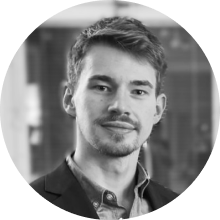
Elias studies Political Science at Stockholm University. His research has covered geopolitical role identity and democratic peace theory, and his current thesis investigates how states’ commitments to perceived geopolitical roles could influence the level of cohesion in international alliances. His academic career has also involved studies of history and the implications that people’s collective understanding of history has on contemporary politics.
He also brings relevant experience from having carried out an internship at the Swedish Embassy in the Netherlands, and having served as international political analyst at a Swedish political newsletter, Utrikespolitisk Afton.
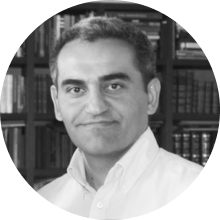
Suren Manukyan is the Head of the Vahakn Dadrian Department of Comparative Genocide Studies with the Armenian Genocide Museum-Institute (AGMI) and holds the UNESCO Chair on Prevention of Genocide and Other Atrocity Crimes at American University of Armenia (AUA). He also teaches Armenian History and Genocide-related courses at the American University of Armenia (AUA).
He was a Fulbright Scholar at the Center for the Study of Genocide and Human Rights at Rutgers University of New Jersey (2012-2013) and Kazan Visiting Fellow at California State University, Fresno (2021-22). He has extensive experience with the International Association of Genocide Scholars (IAGS), including as a member of the IAGS Resolutions committee (2015-2017) and an elected member of the Advisory Board (2017-2019 and 2019-2021). His research deals with genocidal violence and perpetrators, focusing mainly on micro-level dynamics and the historiography of genocide.

Bridget Martin is currently the IB Middle Years Programme Coordinator at the International School of Paris. Originally from Australia, Bridget has been teaching history for almost 15 years. She holds a Master in Teaching from the University of Melbourne and an MA in History from the University of Groningen. Bridget served for four years on the Scientific Advisory Council of the OHTE and has worked with EuroClio for the past eight years on teacher training and textbook writing initiatives.
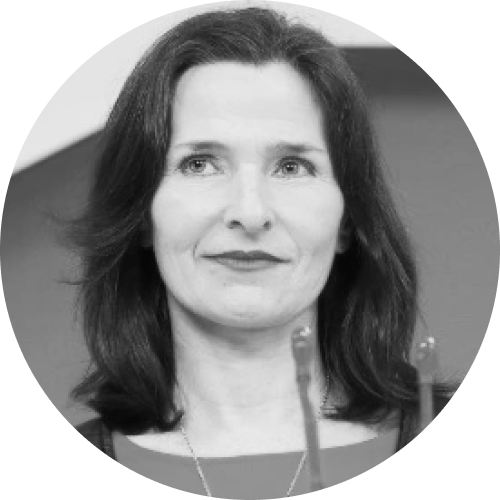
Member of the Spanish Parliament (Congress of Deputies) since 2016 and Member of the Parliamentary Assembly of the Council of Europe (PACE) since 2021. She is a specialist in education policy, democratic citizenship, culture and gender equality, with extensive experience in legislative reform and European cooperation.
She holds a PhD in Educational Planning and Innovation from the University of Alcalá, a degree in English Philology from the University of Valladolid, and is fluent in English and French. She is a Full Professor of English in Secondary Education and a former Fulbright scholar in the United States.
In the Spanish Parliament, she has served as Spokesperson for Education, Vocational Training and Sports since 2017 and was Federal Secretary for Education, Universities and Vocational Training of the PSOE (2017-2024). She was a key negotiator and rapporteur for major education reforms, including the LOMLOE, the Vocational Training Law, the Artistic Education Law, and legislation on teachers’ professional conditions and university coexistence.
Within the Council of Europe, she has served as Chair of the Sub-Committee on Culture, Education and Democratic Values, Coordinator of the SOC Group in the Committee on Culture, Science, Education and Media (CULT), General Rapporteur on Violence against Women, and representative to the European Museum of the Year Award and Europa Nostra.
She is the rapporteur of the Council of Europe reports “Multiperspectivity in Remembrance and History Education for Democratic Citizenship” and “Socialising at Schools: for an Inclusive and Participatory Education Fostering Democratic Values”, and is currently preparing reports on youth democratic engagement and vicarious violence against women.
An author of books and academic publications, she regularly speaks at international forums on education, democratic citizenship, historical memory and cultural policy across Europe.

Sérgio Neto is an assistant professor at the Faculty of Arts of the University of Porto (FLUP) and a research fellow at the Centre for Transdisciplinary Research ‘Culture, Space and Memory’ (CITCEM). His main research areas are the colonial question from a comparative perspective; the history of the First World War and the First Portuguese Republic; and the teaching of history, with a focus on analysing school textbooks for colonial representations and political extremism. He has authored several books, articles, and chapters, and participates in symposia and conferences in Portugal and abroad. He was also a co-editor of Revolution and (Post) War, 1917-1922. Spring and Autumn in Europe and the World (Routledge, 2023) and National and Global Historical Perspectives on Textbooks. The Atlantic Connection (Palgrave, 2026). He regularly conducts sessions in educational institutions and with civil society organisations.
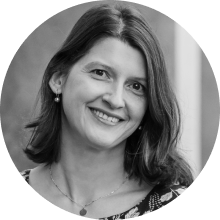
Assistant Professor at the Chair for Eastern European History at the University of Basel, Switzerland, Olena Palko is a historian of Ukraine and modern Eastern Europe. Educated at Kyiv Taras Shevchenko National University, Ukraine, she holds a PhD in History from the University of East Anglia (UK). She has previously worked at Birkbeck College, University of London, and has held Research Fellowships at the Vienna Institute for Human Sciences, Humboldt University (Berlin), the German Historical Institute in Warsaw, and the Polish Institute for Advanced Studies. Olena Palko is a member of the Advisory Board of the Ukrainian Research in Switzerland (URIS). She is the author of Making Ukraine Soviet. Literature and Cultural Politics under Lenin and Stalin (Bloomsbury Academic, 2020), and a co-editor of Making Ukraine: Negotiating, Contesting, and Drawing Borders in Twentieth Century (Montreal, 2022), and Ukraine’s Many Faces. Land, People, and Culture Revisited (Bielefeld, 2023). She is a co-convener of the Study Group for Minority History.
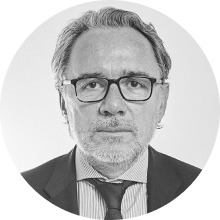
Villano Qiriazi has been the Head of the Education Department of the Council of Europe since February 2022. He graduated in philology (French language and literature) from the University of Tirana in 1988. He joined the Council of Europe in 1996 and gained a rich experience in the development of Council of Europe policies and instruments related to quality education, democratic citizenship and human rights, digital citizenship education, fraud prevention in education, etc. Since 2012, he has been responsible for the secretariat of the Intergovernmental Committee for Cooperation in Education and the Council of Europe Standing Conference of Ministers of Education. He also served for three years as a special advisor to the Director General of the DGII. Throughout these years, he was responsible for the design of several official documents of the Committee of Ministers, the coordination of various publications, and the establishment of European networks in the fields of digital citizenship education and ethics, transparency, and integrity in higher education.
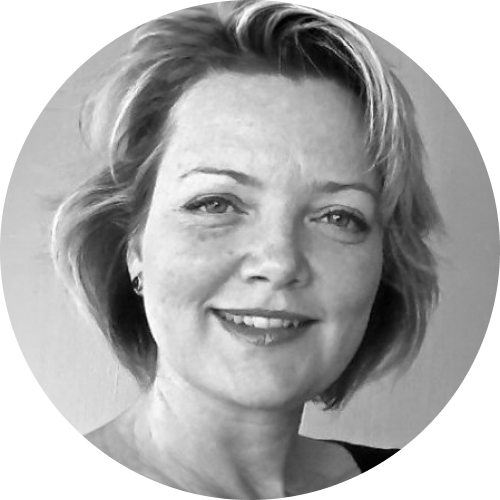
Juliane von Reppert-Bismarck is the Chair and founder of Lie Detectors, an award-winning and journalist-led news literacy organisation raising awareness of disinformation and media bias among schoolchildren and teachers. She directs Lie Detectors’ development and strategy and designed its concept and training approach. Juliane advises national and international institutions on anti-radicalisation and literacy in an age of media pluralism, including within the European Commission’s High Level Expert Group on Digital Disinformation and Fake News and Expert Group on Tackling Disinformation and Promoting Digital Literacy through Education and Training. To create Lie Detectors, Juliane put aside an award-winning journalism career.
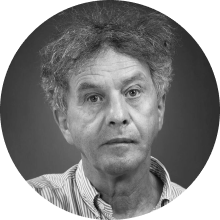
István Rév teaches history at Central European University in Budapest. He was the founding director of the Blinken OSA Archivum. He works on twentieth century history, historical anthropology, and memory, and the techniques and dangers of official historical revisionism.
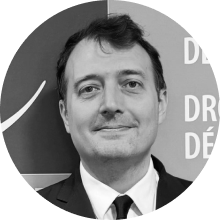
H.E. Mr Gabriel REVEL is the Ambassador and Permanent Representative of the Principality of Monaco to the Council of Europe since June 1, 2023.
A graduate of Sciences Po Grenoble and the École Nationale d’Administration (Georges Clémenceau class of 2017–2018), he began his diplomatic career at the Permanent Representation of Monaco to the Council of Europe.
A graduate in Public Law from the University of Nice (2010).
Following several years with the International Law Section at the Department of Legal Affairs in Monaco, he returned to the Permanent Representation in Strasbourg in 2021.
H.E. Mr Revel chaired the Group of Rapporteurs on Legal Cooperation (GR-J) from September 2024 to September 2026. He also chairs the Statutory Committee of the Enlarged Partial Agreement on Sport (EPAS).
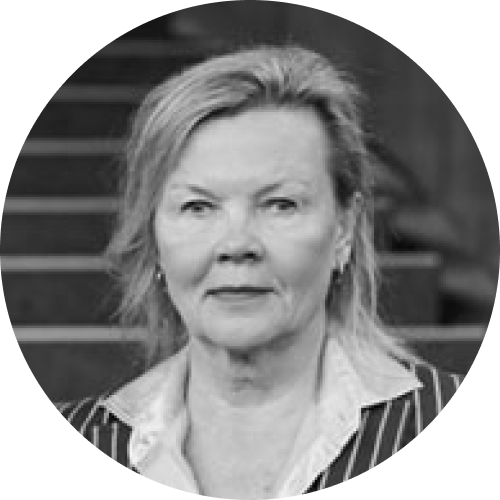
Marja Ruotanen was appointed Director General of Democracy and Human Dignity (DGII) by the Secretary General on 1 September 2022.
She has a deep knowledge of the Organisation and a very extensive leadership and managerial experience, including as Director of Equality and Human Dignity, Director of Justice and Human Dignity, Director of Cooperation, Director of the Committees in the Parliamentary Assembly as well as Director of the Private Office of the Secretary General.
As Director General, she assists and advises the Secretary General, on issues related to democracy, participation and governance, equality, diversity inclusion and human dignity by fighting discrimination, trafficking in human beings, violence against women, domestic violence, and sexual violence against children. Marja is particularly committed to supporting the process towards a New Democratic Pact for Europe, to advancing gender equality and to integrating youth perspectives in the Council of Europe’s work. Determined to increase the efficiency and impact of her teams’ work, she initiates and supports reflections to reform structures and working methods to serve the needs and priorities identified.
Marja joined the Council of Europe in 1990. She has contributed to the drafting and promotion of key human rights treaties, the setting up of monitoring mechanisms, the development of critical partnerships with other international organisations and donors and to the design of transversal programmes mobilising the whole organisation. She also has contributed to major reforms increasing the Council of Europe’s efficiency, impact and accountability.
She focuses on promoting democracy and human dignity through collaborative approaches and is committed to advancing gender equality within the organisation as well as integrating youth perspective in its work.
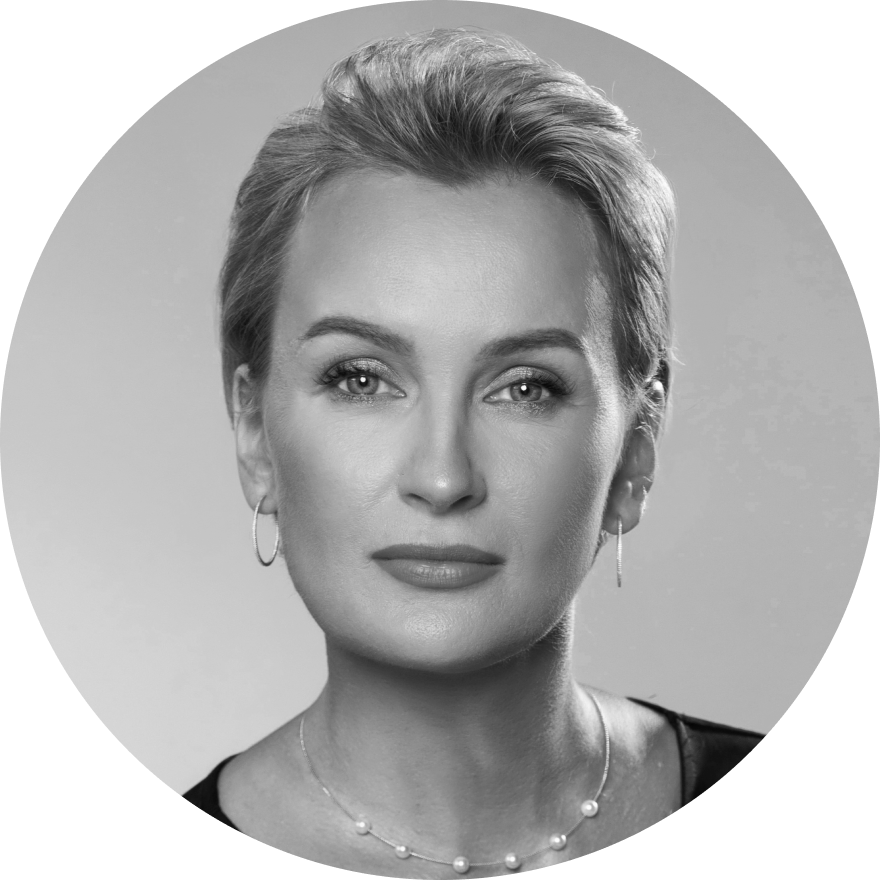
Dr. Dovilė Sagatienė is a legal historian focusing on memory regulation across Europe, and has been Head of the Memory and Justice Research Centre at Mykolas Romeris University (MRU) since 2025, as well as an Advisor to the Vice-Rector on Young Researchers’ Development since 2026. She is former Vice-Dean for Research at the Law School in MRU (2020-2023 and 2024-2026). In November 2024, Lithuania’s Parliament appointed her as a member of the newly-established Council at the Genocide and Resistance Research Centre of Lithuania for a term of five years. In June 2025, she was also appointed as a member of the Scientific Advisory Council (SAC) of the Observatory on History Teaching in Europe (OHTE) at the Council of Europe. From October 2022 until October 2024, Dr. Sagatienė was a postdoctoral researcher at the MEMOCRACY project (Volkswagen Stiftung, 2021-2024), based at the Centre for Military Studies of the University of Copenhagen (Denmark). Her dissertation about Soviet courts of general jurisdiction in occupied Lithuania (2013) focused on Soviet judiciary problems, and her previous post-doc as a Fulbright Scholar at the Harriman Institute at Columbia University in 2019-2020 explored Soviet repression in Lithuania in the framework of the genocide concept.
Mirela Sakej teaches History and Geography at “Oso Kuka” High School in Shkodër, Albania, where she has worked since 2012. She also coordinates the Professional Network for History and Geography Teachers. She holds a Master of Science degree in Regional Studies from the University of Shkodër “Luigj Gurakuqi”. Her work focuses on history education, cultural heritage, critical thinking and digital citizenship. She has completed training in inclusive, competence-based teaching and participated in international conferences and professional development programmes on citizenship, history education and artificial intelligence in education. In 2026, she facilitated a workshop at EuroClio’s international conference in Brussels on historical narratives and student learning in the digital age. Through digital heritage initiatives, she encourages students to evaluate historical sources, recognise bias and use information responsibly.
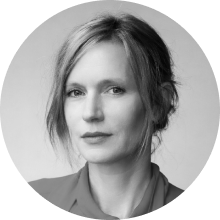
Géraldine Schwarz is a Franco-German actor, journalist and documentary filmmaker living in Berlin. She works for international media outlets and speaks at conferences across Europe on the themes of memory, history, democracy and Europe. In 2017 she published a historical essay and autobiography, Those Who Forget: My Family’s Story in Nazi Europe – A Memoir, A History, A Warning, with Flammarion (Los Amnesicos, Tusquets Editores), which has been translated into more than ten languages and won several prizes, including the European Book Prize. In 2024 she published D’où nous venons – ce qui nous unit, ce qui nous divise (‘Where we come from – what unites us, what divides us’), an exploration of Europe’s multimillennial past, in search of a common history for Europeans. Winner of the Jacques Delors European Book Prize, it is currently being translated into several languages and has just been released in German (Rowohlt) and in Spanish (Tusquets Editores).
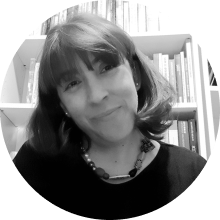
Clara Isabel Serrano is an assistant professor at the Institute of Education, University of Lisbon, and an integrated researcher at UIDEF. Her research lies at the intersection of the history of education, comparative education and postcolonial studies, focusing particularly on school textbooks as sites of memory, identity construction and ideological contestation. Her current work examines the representation of colonialism and decolonisation in educational curricula, as well as the uses and abuses of history by radical right actors in Iberian contexts. She recently co-edited, with Sérgio Neto, National and Global Historical Perspectives on Textbooks: The Atlantic Connection (Palgrave Macmillan, 2026).
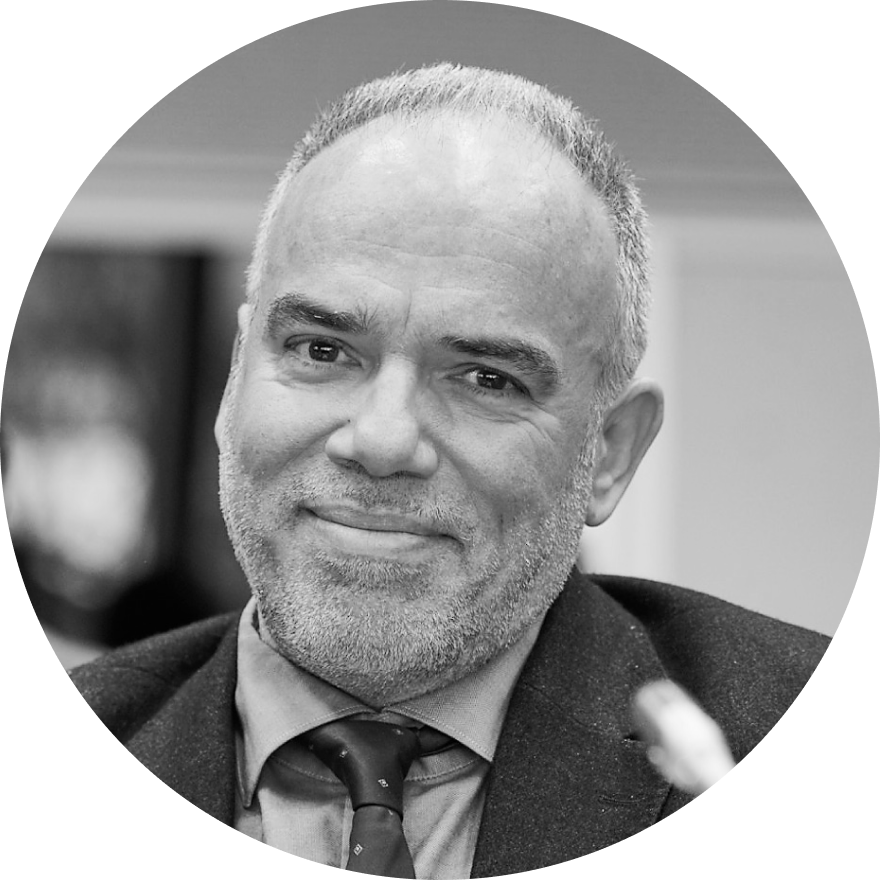
Dimitris P. Sotiropoulos was born in Athens in 1972 and is a Professor of Contemporary Political History at the University of Peloponnese. Since 2023, he is the President of the General State Archives of Greece as well as the Chair of the Governing Board of the Observatory on History Teaching in Europe (OHTE), Council of Europe. He is also a member of the NEW HESTIA’s journal editorial team and has been a regular columnist of several Greek newspapers and magazines. Selected publications: Twisted track. Politics and culture in Greece, 1960-1974 (with Ev. Hatzivasiliou, Metehmio, Athens, 2024); Phases and Contradictions of the Greek State in the 20th Century, 1910-2001 (Hestia, Athens, 2019); From the ’60s to PASOK government (KATHIMERINI editions, Athens, 2019); P. Panagiotopoulos and D.P. Sotiropoulos (eds), Political and Cultural Aspects of Greek Exoticism (Palgrave Pivot, Cham, 2019).
Juraj Varga, trained as an educator and historian, has focused on the development of learning and teaching materials and of teacher training programmes at the regional, national and European levels since 2014. Juraj loves to work with teachers, support them and to create professional development opportunities for them. He founded the NGO Centre for Education and Innovations (CEDIN) in Slovakia in 2017, which is a full member of EuroClio – European Association of History Educators. At EuroClio, he has been active in various projects: “Learning to Disagree“, “Online Teaching in the Visegrad Region“, “Sharing European Histories“, “Who were the victims of National Socialists?“, and most recently, “Making Visegrad Histories Digital“.
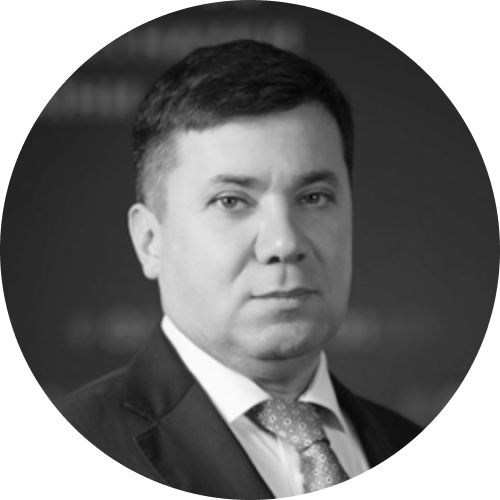
Andrii Vitrenko is a Ukrainian economist, academic, and public official with extensive experience in higher education, public administration, and international cooperation.
He began his academic career after obtaining a Bachelor’s and Master’s degrees in Management of Foreign Economic Activities from Kyiv State University of Trade and Economics in 1999 and 2000, respectively, followed by postgraduate studies in 2000-2003. In 2005, he obtained a PhD in Economics from Taras Shevchenko National University of Kyiv, where he later pursued doctoral studies and obtained a Doctor of Economic Sciences degree in 2017. His academic career at the university included positions as Assistant and Associate Professor at the Department of Economic Theory, as well as Associate Professor at the Department of Economic Theory, Macro- and Microeconomics. His research and teaching focused primarily on economic theory and the development of the service sector.
From 16 July to 23 December 2020, he served as Deputy Minister of Education and Science of Ukraine. From 24 December 2020, he served as Deputy Minister of Education and Science of Ukraine for European Integration. On 11 August 2021, he was appointed First Deputy Minister of Education and Science of Ukraine. Since 30 March 2023, he has served as Deputy Minister of Education and Science of Ukraine.
Andrii Vitrenko has extensive experience in representing Ukraine in international cooperation and advancing strategic priorities in education and science. His professional expertise encompasses public administration, economic policy, higher education, international cooperation, and institutional development.
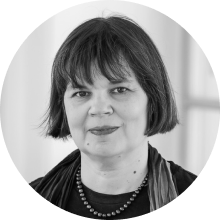
Joanna Wojdon is professor of history at the University of Wrocław, Poland, chair of the Department for History and Civic Education Didactics, president of the International Society for History Didactics, vice-president of the International Federation for Public History, deputy chair of the Committee of Historical Sciences of the Polish Academy of Sciences, and a recently elected board member of the International Committee of Historical Sciences (CISH). She was a co-editor of Putting History to the Test. History Exams Around the World (Wochenschau Verlag, 2026). Her current research project focuses on diasporic public history.
Mychailo has served in multiple positions in Ukraine’s higher education sector including Deputy Minister (2023-2025), Head of the Secretariat of the National Agency for Higher Education Quality Assurance (2019-2022), Member of the National Erasmus+ Higher Education Experts Team (2015-present), and Advisor to three of Ukraine’s Ministers of Education (2015-2019). Originally from Canada (University of Waterloo HonsBA in History and Philosophy), Mychailo has lived permanently in Kyiv for over two decades. He was awarded a PhD in 2004 from the University of Cambridge (U.K.) and gained Ukrainian citizenship in 2019. Mychailo is a regular commentator for English-language media outlets (CNN, Fox News, AlJazeera, BBC, CBC, CTV, KyivPost, and others), and provides analysis on current events in his “Thoughts from Kyiv” blog. His book Ukraine’s Maidan, Russia’s War: A Chronicle and Analysis of the Revolution of Dignity was published in English in 2019, and in Ukrainian translation in 2021.

Yashi Yuan is a doctoral researcher at University College London (UCL), researching history education and historical consciousness in contemporary China. Her doctoral research examines how young Chinese adults studying at leading Chinese universities engage with national narratives, navigate epistemological and ideological tensions, and negotiate their relationships with China’s national past.
Their work explores the interplay between state narratives, transnational perspectives and personal memory-making, with particular attention to how education and transnational political discourses shape historical consciousness and historical identity. Their broader research interests include history education, nationalism, identity formation, questions of epistemic plurality in the study of China. Alongside her research, she teaches across undergraduate and postgraduate programmes at UCL’s Faculty of Education and Society.

Gaja Zabukovšek Lipovšek is an MA student in the Erasmus Mundus Global Studies Programme, jointly studying at Leipzig University and the University of Vienna. She holds a joint Bachelor’s degree in History and Sinology from the Department of History and the Department of Asian Studies at the Faculty of Arts, University of Ljubljana. During her undergraduate studies, she spent six months as an exchange student at National Taiwan University, further developing her academic interest in East Asian history and culture.
Alongside her academic work, Gaja is actively involved in the International Students of History Association (ISHA). She first became involved with the organisation at the regional level as the Representative for International Cooperation for her local section in 2024. In spring 2026, she was elected to the ISHA International Board, where she presently serves as the organisation’s Secretary.
